How to Maintain Swing Tempo and Focus for 18 Holes
Apr 22, 2026
Home > Blogs > Golf Consistency & Performance
How to Fuel for Peak Golf Performance
Quick Answer: To keep your swing consistent for all 18 holes, you need to eat and drink before you feel tired. Most late-round fatigue is just low energy or dehydration. By having a small, healthy snack every four holes and drinking water early, you keep your focus and tempo steady.
A View From the Fringe
I’ve spent the last ten years inside the world of high-level golf instruction. Not as the coach on the lesson tee. Not as the player trying to rebuild a swing. I’ve been alongside it — producing it, organizing it, watching it unfold up close. That perspective lets me see things both coaches and students sometimes overlook.
Certain patterns repeat.
One of the most common looks like this: A golfer plays great on the front nine. By hole 12, something changes. The swing feels off. Decisions take longer. Small mistakes add up. By the back nine, they're fighting their game instead of playing their game.
The first instinct is to blame mechanics. But often, the cause sits outside the swing itself.
Why Your Golf Swing Gets Inconsistent on the Back Nine
The Energy Drop (Whether You Notice It or Not)
Golf isn’t explosive like tennis or basketball. It’s sustained. A round can last close to five hours at a steady level of physical and mental effort. That's a long time to ask your body to perform without consistent fuel.
Here's what I've read in golf-specific research: golfers who play without fueling properly, blood glucose drops throughout the round. By holes 12-15, that drop becomes measurable. Your body has less available energy, so it makes compensations you're not even aware of. Your tempo shifts slightly. Your body rotation changes. Your rhythm goes off. It rarely feels dramatic. Most golfers describe it as, “I just lost it.”
What’s often happening is more simple: energy availability is lower, and the body adjusts accordingly.
Dehydration Starts Sooner Than You Think
Most golfers wait until the turn to grab water. But by then, they're already dehydrated.
I’ve looked into the research, and it turns out thirst is actually a late warning signal. Even a tiny dip in hydration can mess with your focus and coordination. If you're around 150 pounds, losing just a couple of pounds through sweat—which is so easy to do on a sunny day—is enough to slow your reaction time and second-guess yourself more.
Mental Fatigue Takes Over
By holes 15-18, your brain is running on fumes. Attention drops. Memory falters. The ability to commit fully to a shot becomes harder.
I found some fascinating research showing that even "hidden" dehydration messes with your focus and motor control—the exact things we need for solid ball striking. It's a total lightbulb moment: when we start falling apart at the end of a round, we usually blame our swing mechanics. In reality, it’s often just our brains and bodies running on empty.
Once you realize it’s a fuel issue rather than a swing flaw, fixing it feels so much more doable.
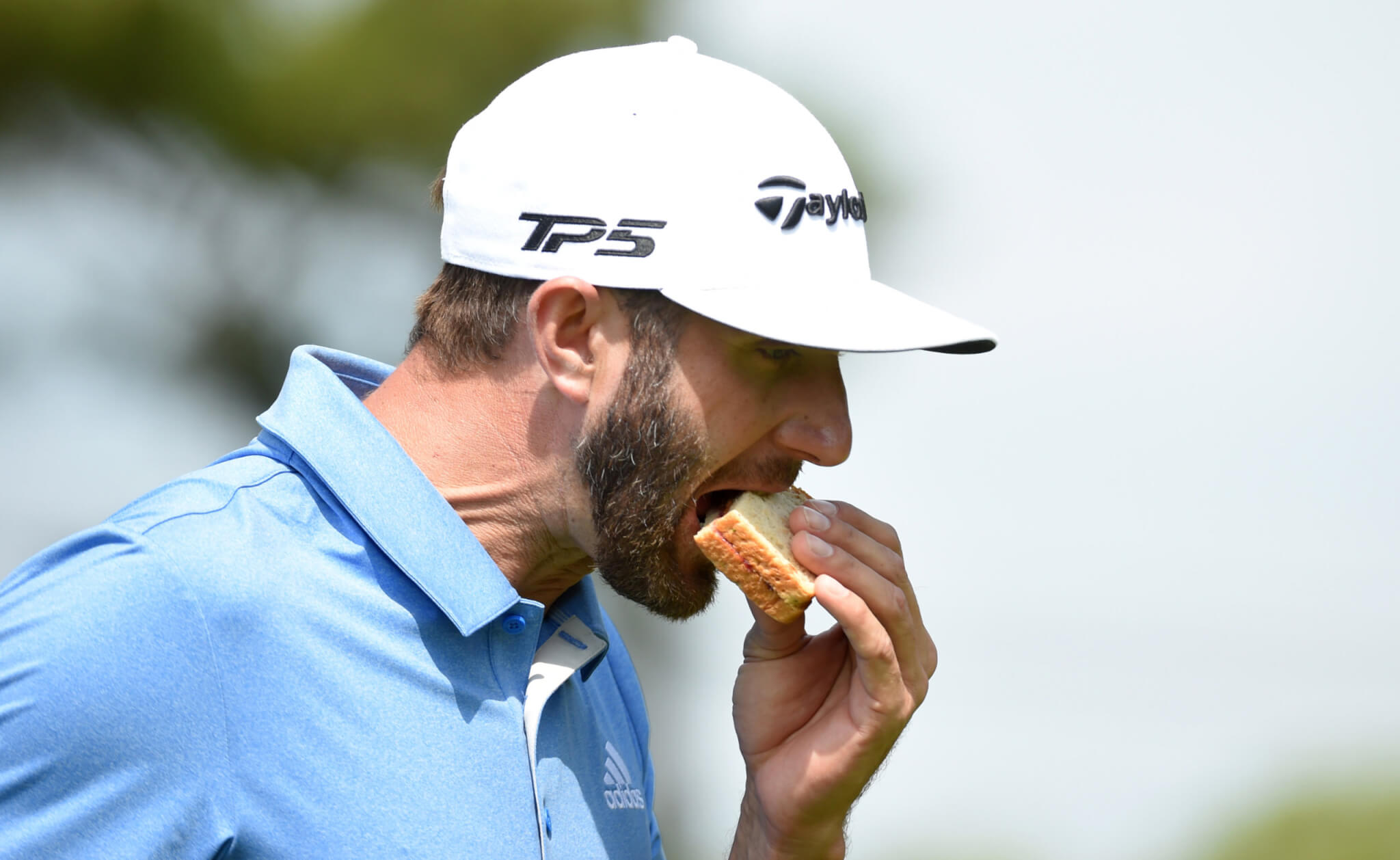
The Gap Most Golfers Don’t Notice
Most rounds start the same way.
Coffee on the drive over. Maybe breakfast, maybe not. A few range balls. Then straight to the first tee without much thought about hydration. By the turn, it’s a quick snack or whatever’s available. Then we expect to feel steady and focused through hole 18.
There’s usually no plan for energy. We just assume it’ll last.
When swing tempo starts to drift or focus fades on the back nine, we tend to look at mechanics. But often, the issue isn’t technical. It’s that the body is running low on fuel and hydration.
Tour players don’t leave that to chance. They eat before they play. They hydrate early. They snack in small amounts throughout the round. It’s steady and intentional.
It’s not complicated. It’s just managed.
And for many golfers, that simple shift is enough to keep tempo, coordination, and decision-making more stable from the first tee to the 18th green.
The "Pro" Habit vs. The Weekend Routine
|
Feature |
The "Back-Nine Fade" (Typical Amateur) |
The "Strong Finish" (High-Level Player) |
|
Pre-Round |
Coffee, a sugary muffin, or skipping breakfast entirely. |
Balanced meal with protein and complex carbs (like eggs or oats). |
|
Hydration |
Drinks only when thirsty; usually waits until the turn. |
Proactive sipping every 2–3 holes; uses electrolytes. |
|
Snacking |
Grabs a heavy hot dog or chips at the turn (the "sugar crash"). |
Small, strategic snacks (nuts, jerky, or fruit) every few holes. |
|
Mental Focus |
Fatigue leads to "silly" mental errors and lazy club choices. |
Sharp mental clarity; stays committed to every shot through 18. |
|
Swing Feel |
Timing feels "off" late in the round; body feels heavy. |
Consistent tempo and rotation because the muscles have fuel. |
|
The Result |
Blow-up holes on 16, 17, and 18. |
Ability to close out the round with confidence. |
How to Fix Your Back Nine (Without Changing Your Swing)
What Should Golfers Eat Before a Round of Golf?
Eat a real meal. And no, coffee and a pastry don't count! Go for something with protein, healthy fats, and slow-burning carbs.
Why? Steady energy. You want fuel that carries you through all 18 holes, rather than a sugar spike that leaves you crashing by the turn.
Strong options: eggs with whole grain toast, oatmeal with fruit and nuts, Greek yogurt with granola, a smoothie with protein and healthy fats.
What to avoid: just caffeine, sugary breakfast foods, or skipping food entirely.
Start hydrating an hour before your tee time. Don't wait until you're on the course. Get a head start.
Ask yourself: Have I eaten something with protein? Am I relying on caffeine instead of real fuel?
What Should Golfers Eat and Drink During a Round?
Maintain hydration consistency. Sip water every 2-3 holes. Not just at the turn. Throughout.
Research I've read confirms that electrolytes help your body retain water better than plain water alone, especially during heat and sustained activity. So water is good. Water with electrolytes is better.
Eat strategically every few holes. The best on-course snacks are easy to carry and digest slowly:
- Protein bars (low sugar)
- Nuts or trail mix
- A banana or apple
- Jerky
- PB&J sandwich
These deliver steady energy without the spike-and-crash that kills your back nine.
I've read golf nutrition research that suggests aiming for roughly 30-60 grams of carbohydrates per hour during a round. The snacks listed above fit that target naturally.
What to avoid at the turn: the hot dog, chips, and soda combo. High sugar with little nutritional value creates the exact energy crash that costs you the back nine.
At the turn, refuel lightly. Don't reset heavily. A banana and water. A protein bar. Maybe a half sandwich. You're maintaining energy, not starting over.
Ask yourself throughout the round: Am I eating before I feel tired, or after? Am I maintaining energy, or reacting to a crash?

The Back Nine Checklist
Before the Round
- Eat a real meal with protein, carbs, and fats
- Start hydrating at least an hour before your tee time
During the Round
- Sip water every 2-3 holes
- Add electrolytes, especially in heat
- Eat a small snack every 3-4 holes
At the Turn
- Light refuel only, not a heavy reset
- Choose nutrient-dense foods over convenience foods
Back Nine Reality Check
- Is your energy steady?
- Is your focus sharp?
- Is your hydration consistent?
If not, it's probably not your swing.
Why Better Golfers Finish Strong
When you spend time around high-level players and instructors, you notice something immediately: they don't leave fueling to chance. They bring their own snacks. They hydrate intentionally. They treat performance like performance.
It's not complicated. It's just consistent. And it's a standard any golfer can adopt, regardless of handicap or current skill level.
Swing Consistency Starts Before You Take the Club Back
Most golfers say they want more consistency, fewer blow-up holes, and better scores at the end of the day.
But I’ve realized that consistency isn't just about mechanics. It's totally physical and mental, too. And all three are directly affected by how you fuel your body.
When you're well-fueled, you don't just feel better; you actually make smarter club choices and really commit to your shots. Plus, it’s so much easier to bounce back from a bad hole when your brain isn't foggy! Honestly, the difference between a round that stays on track and one that falls apart is usually decided before you ever step on the first tee.
It all comes down to whether you gave yourself the focus and energy to keep going.
Where Does Your Swing Actually Come From?
Here's what I've learned from ten years in golf instruction: your swing isn't in your head. It's not in your body mechanics alone. It’s actually a mix of your technique, your energy levels, and your focus especially when the pressure is on.
If you find your game falling apart on those last few holes, the first thing I’d ask isn’t "What’s wrong with my swing?" but rather, "Did I actually give myself the fuel to stay sharp?"
Most of the time, when golfers fix this one little thing, their consistency sky-rockets. Not because their swing suddenly got better; it’s just that their body finally had the energy to do what they already know how to do
When Your Swing Isn't Actually the Problem
Most golfers spend thousands on equipment. They invest in lessons. They practice regularly. Then they show up to a 4-5 hour round with no proper plan for water or snacks.
It's honestly one of the simplest performance fixes available. And one of the most overlooked.
But it's also a perfect example of what I see across all levels of golf instruction: improvement doesn't happen in a vacuum. Your mechanics matter. Your focus matters. But they only work when everything else is aligned.
That's why we design our golf schools the way we do. We don't just work on swing mechanics during those two days. We also dive into course strategy, mental game, how you manage your energy, and how to apply everything under real conditions.
Because real improvement happens when all those pieces click together—not just the swing, but everything.
If you're curious about what that looks like in a focused, immersive setting with personalized coaching, we'd love to have you experience it.
Learn about our 2-day golf schools or talk to us at (610) 756-7730
Read Next
How to Improve at Golf: Lessons, Online Coaching, or a Golf School? — Understanding which method matches where you are in your improvement journey.
Stay connected with news and updates!
Join our mailing list to receive the latest news and updates from our team.
Don't worry, your information will not be shared.
We hate SPAM. We will never sell your information, for any reason.
Author
