Should You Get Fit for Golf Clubs Before You Fix Your Swing?
Jul 30, 2026
Home > Blogs > Golf Consistency & Performance
Most golfers wait until their swing is "fixed" before getting fit for clubs. Club fitters and instructors largely agree that's backward. Wrong equipment often causes the swing flaw in the first place. Getting fit first removes that variable, so you actually know what you're working with.
A View From the Fringe
Eric and I have spent the last ten years building out Cogorno Golf, and in that time I've watched countless students come through 1:1 lessons with him. Over and over, I hear some version of the same sentence. "I want to get fit for new clubs, but I figure I should wait until my swing is actually good enough to deserve them."
I get why people think that. It feels responsible. Why spend money dialing in equipment for a swing you're not happy with yet?
Here's the thing. That logic might be backward.
Why Getting Fit Before You Fix Your Swing Might Be the Right Order
We used to work with a club fitter named John Hutzler. He had a line he'd repeat to golfers all the time:
"Take the gear out of the equation, get fit, and then work on your swing, because then you know it's not the equipment, it's literally your swing."
I've thought about that line for years. What he's really saying is simple. If your clubs don't fit you, your body has to compensate for them somehow. And that compensation can look exactly like a swing flaw, even when it isn't one.
Turns out John's not the only one who thinks this way. When I went looking, I found a few voices in the golf world saying almost the same thing.
True Spec Golf's VP of Tour and Education wrote a piece for GOLF.com making this exact case. His point was that a good fitting isn't a reward for having a solid swing. It's a tool to help you build one. He put it plainly: the less consistent your swing, the more important fitting becomes.
Golf Digest asked a top-100 clubfitter, Nick Sherburne, the same "chicken or egg" question golfers bring up constantly. His answer: get fit first, every time, but tell your fitter you're planning to take lessons too, so the two can work together instead of against each other.
Even GolfTEC, which is in the business of teaching swings, not just selling clubs, has said something similar on their own blog. Their estimate is that in something like 80 percent of cases, getting fit first is the more sensible path.
Three different people, three different jobs in golf, landing in roughly the same place. That's worth paying attention to.
Do Beginners Need to Get Fit for Golf Clubs Too?
I want to be fair here, because this isn't universal advice for every single golfer.
If you're brand new to the game and you don't have a swing that repeats yet, most fitters will actually tell you to hold off. Get a handful of lessons in, or play enough rounds to develop a consistent miss, and then get fit. Otherwise you're fitting clubs to a swing that's still changing every week, and the fitting won't hold up.
So the real line is this. If you've been playing a while and you have some kind of repeatable pattern, even a flawed one, getting fit first probably serves you better than waiting. If you're truly just starting out, a few lessons before your first fitting makes sense.
Which Golf Club Should You Fit First?
Here's a question I get asked a lot, and I'll be honest with you upfront. I don't think there's a clean answer out there.
If you're building out a full bag and can't fit everything at once, what should you prioritize? I went looking for a straight answer on this, and here's what I actually found instead.
One golf equipment site makes the case for the putter first, and their reasoning is hard to argue with on its face. It's the one club you're guaranteed to use on almost every hole you play. Get that wrong and it costs you constantly.
On the other hand, a scratch golfer and longtime equipment tester who writes for MyGolfSpy argues for irons first. Her logic is that if you're talking about full swings, irons are where most of your round actually happens. Approach shots, layups, recovery shots, all of it. And to her credit, she admits she still hasn't gotten her own putter fit in twenty years, even while telling other golfers irons matter more.
Then there's how the professional fitting companies actually run the process. Club Champion, one of the bigger names in fitting, walks golfers through woods, then irons, then wedges, and saves the putter for last, on its own dedicated setup. That's not a ranking of importance so much as a practical workflow. But even they've called the putter arguably the most impactful club in the bag.
So ask three different, credible people which club matters most to fit, and you'll get three different answers. I'm not going to pretend I have a fourth answer that beats theirs. What I can tell you is what happened when I got fit myself.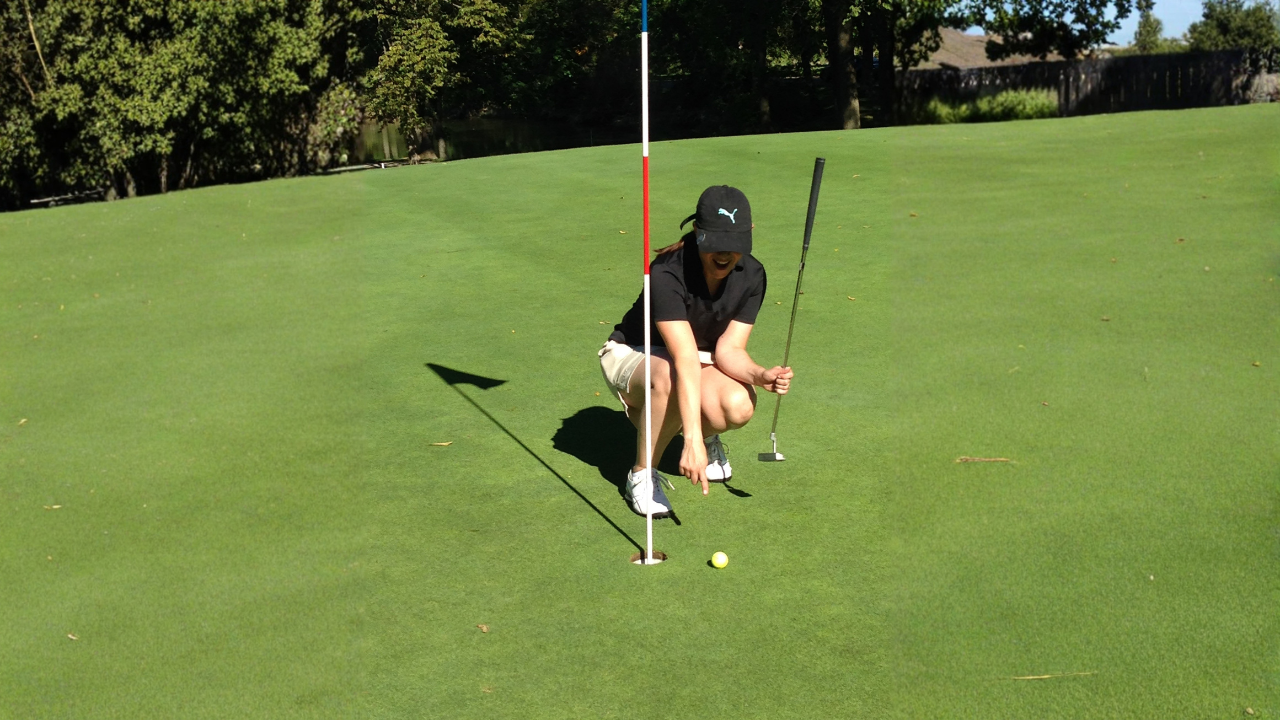
Why I Got Fit for My Putter (And Why It Mattered Most)
The one club that made the biggest difference for me, personally, was my putter.
I didn't expect that going in. Like a lot of golfers, I figured the putter was simple. Just a stick that rolls the ball. Not something that needed real attention.
I was wrong. Once I got properly fit for a putter that actually matched me, something clicked that hadn't clicked before.
That putter is five years old now. It's worn. It's a little battered. And I still love it. I love it so much I haven't touched another one since.
I'm not telling you this because I think it proves the putter should be everyone's first priority. I told you above, the experts don't even agree on that. I'm telling you because it's the club most people never think to fit, and for me, it mattered more than any other change I made.
Wedges deserve a mention here too. People tend to assume driver is where the real gains are, and wedges get overlooked. But wedges are in your hands constantly around the green, and a fitting that accounts for how you actually use them can quietly save you strokes you didn't know you were losing.
Short Game Practice You Can Start Before You Get Fit
Whether you get fit next month or next year, your short game practice doesn't have to wait on any of this.
Eric put together a putting practice plan built around five specific skill areas, five minutes each, for a 25-minute routine you can repeat for the rest of your golfing life. It walks through things like your start line, your stroke length and tempo, distance control with a mid-to-long ladder drill, and reading greens.
He built the chipping plan the same way. Five phases, five minutes apiece, also 25 minutes total. It covers your landing zones, your trajectories, the bump and run, and getting up and down when you miss a green.
Together, those two make up the Short Game Practice Bundle. If you only want one piece to start, you can also grab the putting plan or the chipping plan on their own.
Fit or not yet fit, that's 25 minutes a day that moves your short game forward. And since putting and chipping make up such a large share of your actual score, it's a good place to put your attention regardless of where you land on the fitting question.
Ready to Get Fit and Build a Real Plan?
Fitting solves the equipment side. But if you want someone watching your actual swing, diagnosing what's really going on, and building a plan around it, that's what our two-day schools in Pennsylvania and Florida are for.
Claim Your Spot at Eric Cogorno’s 2-Day In-Person School
Prefer to talk it through first? Call or text me directly at (610) 756-7730 and I'll help you figure out if a school makes sense for where you're at right now.
Not ready for a school yet, or just want to sharpen what you've already got? Start here.
Explore the Short Game Practice Bundle
Just want putting? Get the Ultimate Putting Practice Plan
Just want chipping? Get the Ultimate Chipping Practice Plan
Stay connected with news and updates!
Join our mailing list to receive the latest news and updates from our team.
Don't worry, your information will not be shared.
We hate SPAM. We will never sell your information, for any reason.
Author
