Does Your Golf Instructor Cover Real Course Shots, Not Just Range Swings?
Aug 27, 2026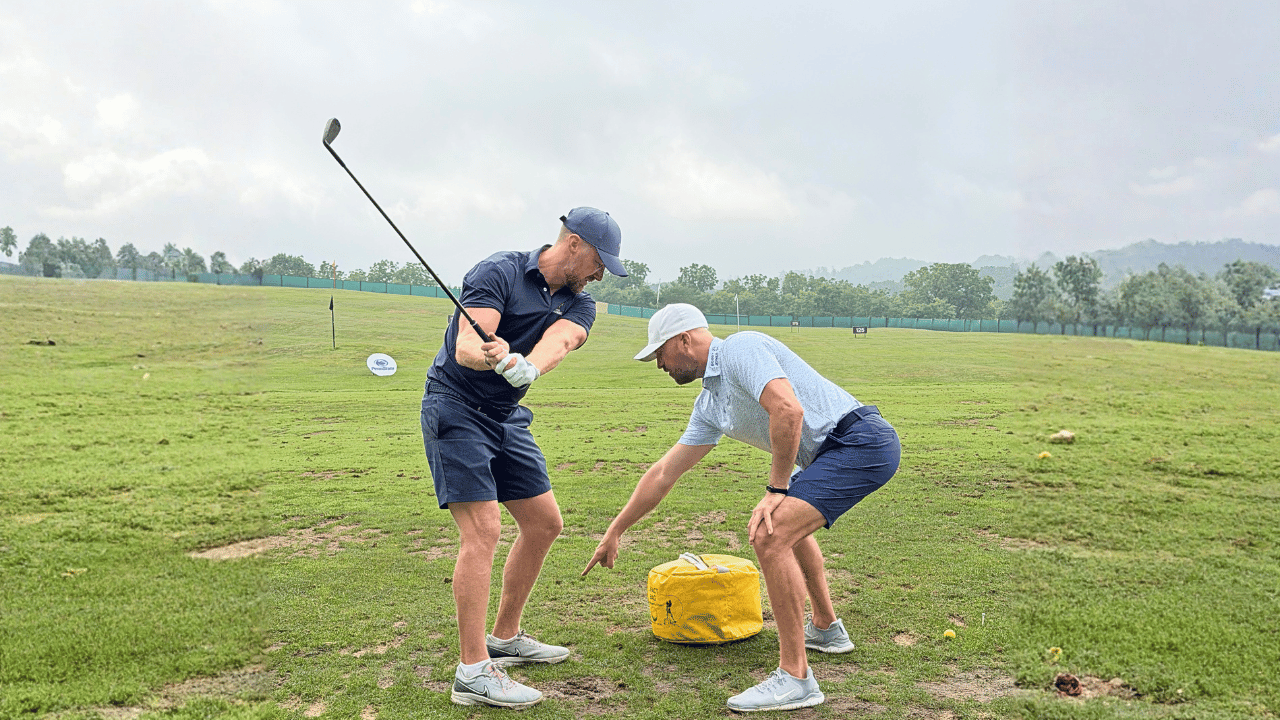
Home > Blogs > Golf Improvement & Coaching
Before you book a golf lesson or a clinic, ask about seven things: bunkers, real on-course play, your ball flight, wedges, punch shots, uneven lies, and how long real improvement actually takes. If an instructor gives you real answers instead of vague promises, that's a good sign.
A View From the Fringe
Eric and I have spent ten years building Cogorno Golf together, and for most of that decade, I watched him work one-on-one with students, lesson after lesson. Since our two-day schools started up again in 2025, I've been in the room for those too, coordinating every school and watching that same coaching happen in a different format.
That's the vantage point this list comes from: years of watching what separates a program actually built around your swing from one that just says it is.
There's a question I keep seeing worded almost exactly the same way, over and over: can this instructor help with real-course shots, not just range swings. That's a real question from a real golf forum, not something we made up to sell you on Eric.
If you're evaluating any instruction option right now, here are seven things worth asking about directly, and what a real answer should actually sound like.
What to Ask About Bunker Instruction
Bunker play is one of the clearest tells of real coaching, because it's specific enough that a vague answer gives itself away. Eric's own bunker method comes down to three things he's used personally for twenty years: an open clubface for loft and bounce, weight kept forward through the whole swing, and accelerating through the sand instead of decelerating at it.
Walt S., who came through one of our schools, put it plainly:
"Short game has had a drastic improvement especially out of bunkers."
Ask any instructor what specifically happens in bunker instruction, not just whether they'll "work on it."
Does It Actually Transfer to the Course
Range mechanics and on-course execution are two different skills, and a real program treats them that way. Ours runs nine holes of on-course play both days, with coaches right there while you play, not just in a classroom beforehand.
Tom D., from a recent school, described it this way:
"The on-course insights, coaching, and situational guidance provided another level of learning and new context on how to approach a shot, a hole, and the round."
Ask how much time you'll actually spend on the course with a coach, not just at a station or in a booth.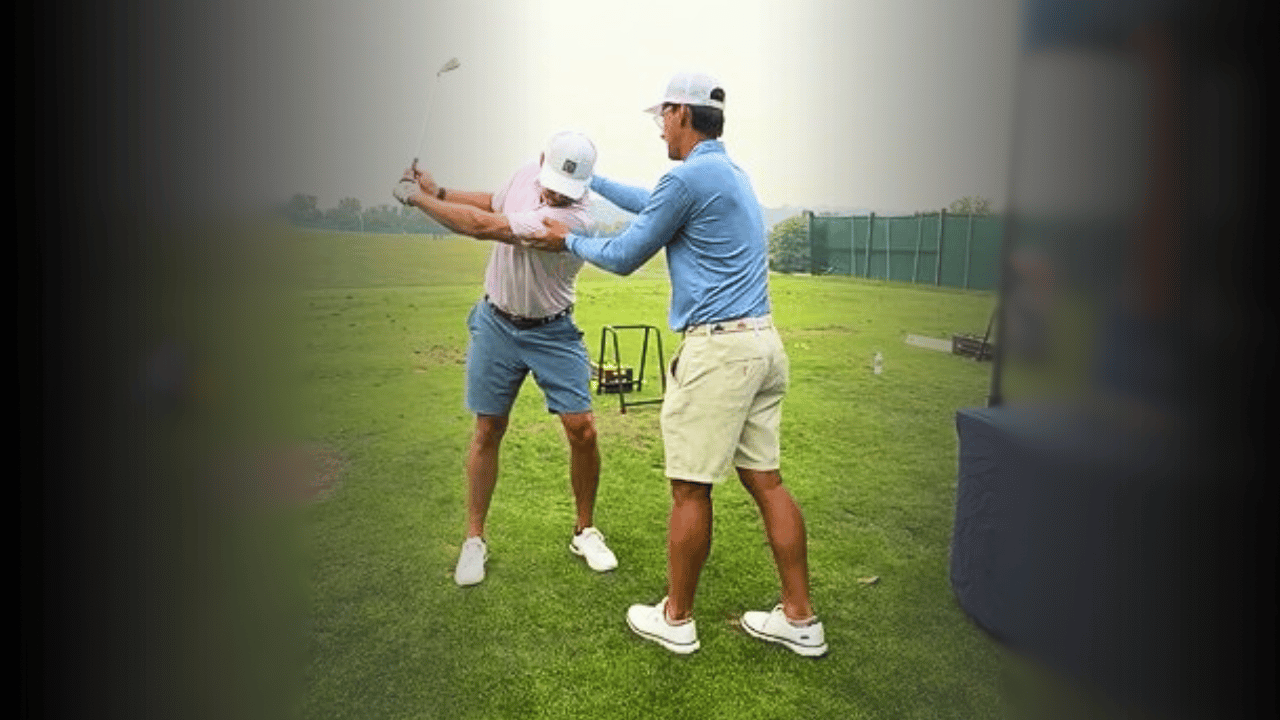
Does the Instructor Diagnose Your Draw or Fade Before Day One
A real diagnosis happens before you ever show up. Our golf school pre-event questionnaire asks directly whether your misses curve, and which direction, before day one starts:
Q1: How often do you play or practice?
Q2: What's your normal score range?
Q3: What’s your most common full-swing miss (contact or direction)?
Q4: If you mishit, is it usually more fat (heavy) or thin (topped)?
Q5: On direction misses, do you tend to miss more right or more left?
Q6: When you miss left or right, does the ball curve (fade/slice or draw/hook)?
Q7: If we could fix ONE thing with your full swing first, what would it be?
Q8: How would you rate your chipping and putting?
Q9: What are the main areas you want to improve?
Q10: What’s your current handicap or average score? (If you’re not sure, give your best guess.)
Q11: Do you have any physical limitations or injuries we should be aware of?
Q12: Age Range
Ask if an instructor diagnoses your specific miss pattern in advance, or waits to find out on the first tee.
Do Wedges Get Real Instruction Time
Most golfers use whatever wedges came in their set and never think about them again, but wedges get more real-round use than almost any other club. Our chipping curriculum covers distance control, trajectory, and bunker fundamentals together, and Eric has a dedicated wedge video walking through the specifics.
Ask whether wedges get their own real instruction time, or just get lumped into "short game" as an afterthought.
Are Punch Shots Part of The Drill
Punch shots deserve a mention, but maybe not the way you'd expect. Top instructor Mark Durland told GOLF.com that punch shots work best as a practice drill, even though most golfers only think of them as a recovery shot. Rehearsing one teaches you to control your wrist angle and create forward shaft lean, which is exactly what makes contact solid with any club in your bag.
Durland put it simply:
"Punch shots are a great way to learn how to control our wrist angles."
His drill: half-swing punch shots that finish with straight arms and the clubhead under your hands, working up to 60-80 yard shots, which builds the same flat-bottomed swing that keeps your regular shots consistent.
If you're actually looking to escape trouble on the course with a real punch shot, GOLF.com has a separate breakdown of that too.
Ask an instructor whether punch shots come up as a practice drill, a recovery skill, or both, so you know what you're actually getting.
Does the Instruction Cover Uneven Lies and Slopes
Slopes around the green get specific, direct coverage. Eric has a video walking through exactly how to chip from a slope. Full-swing uneven lies, the kind you hit from a hillside fairway, come up more situationally, addressed as they happen during on-course play rather than as their own dedicated station.
Ask whether a program names a specific method for slope shots, or just says they'll handle it if it comes up.
Does the Program Tell You the Truth About Timeline
One more thing worth checking before you book anything: does the program tell you the truth about how long real improvement actually takes, or promise you'll leave hitting it like a different golfer.
Tony M., from a recent school, said it about as clearly as anyone has:
"It takes much practice & many reps over time to see real/sustained improvement... Eric framed it properly, ie, you have provided the 'blueprint' to follow for improvement... executing the blueprint is the key to accomplishing that goal & that likely won't come quickly or easily."
Eric tells every school the same thing on day one:
"This isn't just a two-day golf school. It's the kickoff of a three-month improvement journey. So these two days? They're the start. Not the finish."
That's the same idea behind why your best range session doesn't always show up on the course right away either, something we get into in Why Your Best Shot at the Range Isn't Your Best Shot on the Course. Real improvement happens over weeks of practice, not in a single room.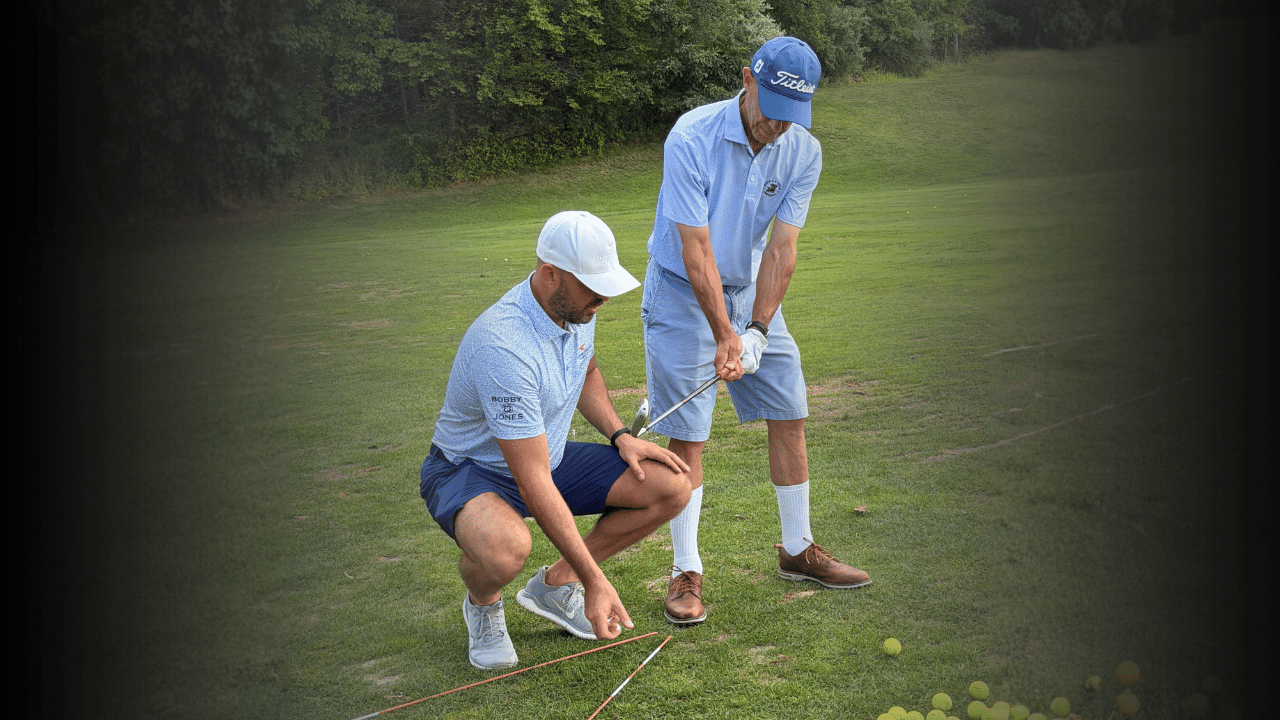
Seven Questions to Ask Before You Book a Golf Lesson
Before you book anything, copy these seven questions and bring them into the conversation. A real program will have real answers to all of them.
- What specifically happens in your bunker instruction?
- How much time will I spend on the course with a coach, not just at a station?
- Do you diagnose my miss pattern before day one, or wait to see it on the first tee?
- Do wedges get their own instruction time, or do they just get lumped into "short game"?
- Are punch shots part of my practice drills, my on-course recovery skills, or both?
- Do you have a specific method for slope shots, or do you just handle it if it comes up?
- What happens after day one, and how long should I really expect improvement to take?
Ask all seven. A program that answers with specifics is showing you real coaching.
RELATED READING:
→ Why Personalized Coaching is the Only Way to Make Swing Improvements Stick — Learn why Ray's 4-handicap drop came from tailored coaching, not generic drills.
→ Why Your Best Shot at the Range Isn't Your Best Shot on the Course (But It Could Be)
Tired of All the Golf Advice?
Get practical perspectives on what to focus on, how to practice, and what can actually help you make progress.
We hate SPAM. We will never sell your information, for any reason.
Author
